Road to Kubestronaut
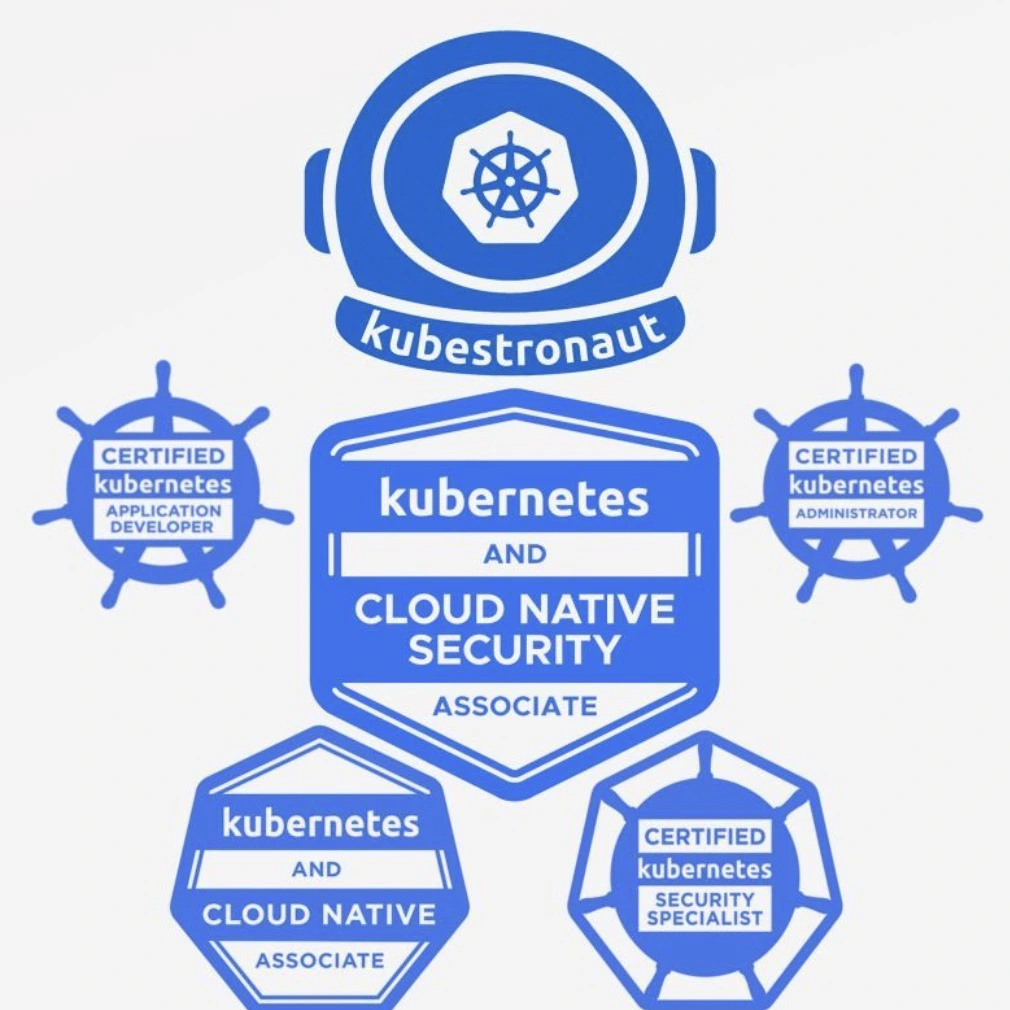
When I started working with Kubernetes, I had no idea it would take me this far. What began as a way to orchestrate containers for production workloads turned into a mission that transformed how I think about infrastructure, automation, and cloud-native technologies. Today, I can proudly say I’ve joined the ranks of Kubestronauts, making me the 9th Kubestronaunt in Slovenia.
What Does It Mean to Be a Kubestronaut?
A Kubestronaut isn’t just someone who uses kubectl daily. It’s someone who deeply understands Kubernetes—how it works under the hood, how to secure and scale it, and how to automate its every aspect. Becoming a Kubestronaut means being comfortable navigating the unknown: debugging cluster issues, designing multi-tenant architectures, enforcing security policies, and optimizing for performance.
To get there, you need a few critical ingredients:
- Solid foundations in containers, Linux, and networking.
- Hands-on experience deploying and operating clusters in real-world scenarios.
- Discipline and curiosity to keep learning, because Kubernetes evolves faster than most tools in our ecosystem.
- A structured learning path.
My path
Since I was already working with Kubernetes for my job, I didn’t have to start my journey from scratch. But just to get a better base of knowledge, I bought KodeKloud’s Udemy course for CKA. I was never a believer in just reading about technologies and not playing around with them, so after I finished the course, I started to seriously prepare for the CKA.
CKA
For this exam, I first used one of the Killer.sh simulators to test my knowledge. While I wouldn’t pass the exam according to the simulator, it gave me a good picture of how the exam is structured and what I need to look out for.
Next, I solved all the Killer Coda exercises for CKA. This gave me enough practice and knowledge to try the second simulator, which went much better.
Now, the last step for me was to just go through all the questions for the simulator again to really check that I understood them.
After that, I scheduled my exam and passed it.
KCNA
I then took quite some time to take my KCNA. For this exam, I just searched for all the free resources I could find and then took around 1 week to learn.
This wasn’t a hard exam, and if I took it right after the CKA and not more than half a year later, I don’t think I would have to study for it.
KCSA
This one was harder than I expected. You needed to know a lot more about security outside of Kubernetes, and there is also a lack of resources on the internet.
As with the KCNA, I tried to find resources online and study them.
CKS
Now comes the hardest Kubernetes exam, as well as probably one of the hardest IT exams in general. Once again, I solved all the Killer coda exercises for CKS and then did the first simulator. I then reviewed my answers and picked up what I didn’t know. After that, I solved the second one and also analyzed the questions I didn’t know. After all that, I did the real exam.
CKAD
The last one was the CKAD, and since I already studied so much for the CKS, I just solved the simulator and then went to write the real exam.
Practice, practice, practice
If there’s one universal truth in this journey, it’s this: practice is everything. Kubernetes is not something you can master by watching a few tutorials or reading documentation. You have to live in it. Each time you deploy a new app, isolate a bug, or experiment with a policy, you sharpen your instincts. Theoretical knowledge fades quickly, but hands-on experience builds intuition—and Kubernetes rewards intuition more than memorization. Think of practice as the “fuel” that keeps your learning rocket in orbit. It’s repetitive, sometimes frustrating, but that repetition builds the reflexes every Kubestronaut needs.
Conclusion
If you’re thinking of becoming a Kubestronaut yourself, start by learning your fundamentals, building a cluster, and then launch into practice with tools like Killer.sh and Killercoda.
The journey can be a long one, especially if you don’t have any prior experience, but just be consistent, and you will also become a Kubestronaut.
Happy clustering, fellow Kubernetes enthusiasts. 🚀